Auto Paint Repair Cost: Factors That Influence the Price & What Drivers Should Expect
Finding scratches or dents on your car is never fun. One of the first questions that comes to mind is: how much will this cost to fix? The truth is, auto paint repair cost varies widely depending on several key factors. If you face any problem related iphone guide then visit this page.
Car paint repair can range from as little as $50 for a simple DIY touch-up to over $5,000 for a complete professional respray services. Understanding what drives these costs helps you make smart decisions and stay within your budget.
This guide explains the main factors that influence paint repair pricing so you can know what to expect when getting your car fixed.
Key Takeaways
• Damage severity directly impacts cost, with surface scratches costing $50-$300 and severe paint damage reaching $3,000+
• Labor cost accounts for 40-60% of total auto paint repair cost, varying by shop and repair complexityIf you have any issue related to Service StabiliTrak then dont worry we also provide solution of this issue here on this website.
• Vehicle make and model matter significantly, with luxury cars costing 20-50% more than regular vehicles
• Paint type affects price, from affordable options to premium urethane paint with metallic paint adding 20-30% extra
• Professional paint repair runs $945-$5,000+ with warranties, while DIY paint repair costs $150-$300
• Location matters – regional pricing differences can vary by 30-50% across the USA
Understanding Auto Paint Damage Types and Repair Costs
The type of vehicle paint damage on your car plays the biggest role in determining repair costs. Different damage levels need different approaches and materials.
- If you want to read about Repair a Bumper Dent than visit this page.
Surface-Level Scratches and Clear Coat Damage
Surface scratches are the most common and cheapest type of damage to fix. These scratches only affect the top clear coat layer without reaching the colored paint layers underneath.
Minor paint damage like this typically costs between $50 and $300 to repair. The price depends on how many scratches you have and where they’re located. Surface preparation for these repairs is minimal, which keeps costs down.
DIY repair kits work well for clear coat damage. You can find touch-up paint kits at auto parts stores for $15-$50. These kits include everything needed for small repairs and take 1-2 hours to complete.
Professional body shops charge more but guarantee better color accuracy. They use specialized tools to blend the repair seamlessly with your existing paint. Most shops complete these repairs in one day.
Deep Scratches and Primer Exposure
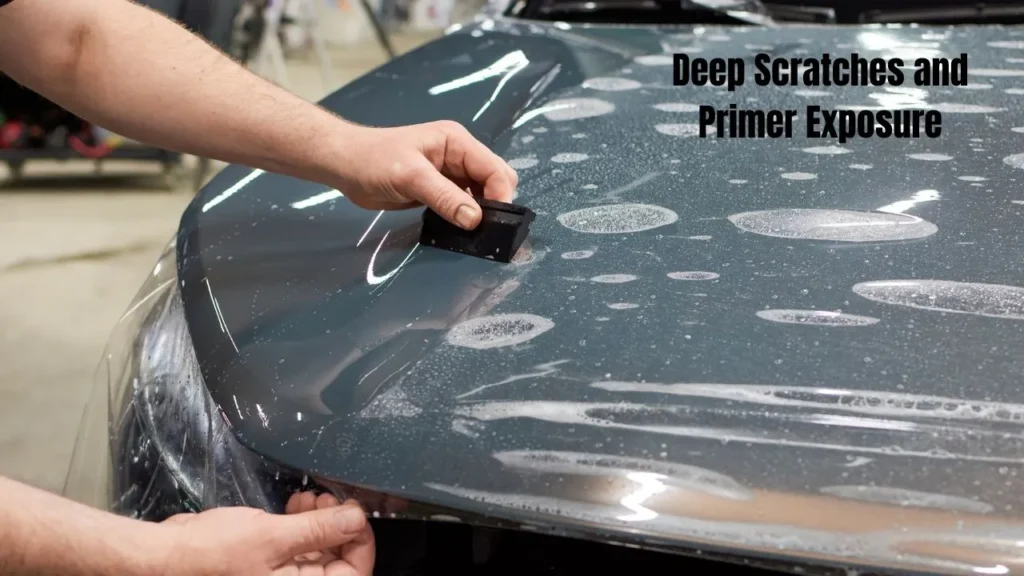
Deep scratches cut through the clear coat and colored paint, exposing the primer layer underneath. This medium-level damage requires more work than simple surface scratches.
The auto paint repair cost for deep scratches ranges from $300 to $800. Skilled technicians must sand the damaged area, apply new primer, match your car’s color exactly, and add protective clear coat layers.
Color matching becomes critical with deep scratches. Your car’s car brand paint codes help technicians mix the exact shade. Older cars with sun-faded paint present extra challenges for perfect color accuracy.
Most deep scratches repairs take 2-3 days at professional shops. The repair complexity increases when scratches appear on curved panels or near body lines.
Dents, Rust, and Multi-Layer Damage
Severe paint damage includes dents, rust, and damage that affects multiple paint layers down to bare metal. This damage often involves metal bending that must be fixed before any painting begins.
Repair estimates for severe damage range from $800 to $3,000 or more. The wide range depends on the number of affected vehicle panels and whether rust treatment is needed.
Rust complicates repairs considerably. Skilled technicians must remove all rust completely before applying new paint. Otherwise, rust continues spreading under the fresh paint. This adds labor hours and increases costs significantly.
When damage affects three or more panels, a full car paint job might make more sense. Complete repaints start at $3,000 and ensure uniform appearance across your entire vehicle.

Labor Costs: The Biggest Factor in Auto Paint Repair Pricing
Labor cost represents 40-60% of any auto paint repair cost. Understanding why labor costs so much helps you appreciate the value skilled technicians provide.
Why Labor Accounts for 40-60% of Total Costs
Professional paint repair requires extensive training and experience. Skilled technicians spend years learning proper techniques for paint mixing, color matching, and achieving smooth, durable finishes.
Hourly shop rates typically range from $50 to $150 across the USA. Auto body shop rates vary based on location, reputation, and technician expertise. Higher rates usually indicate more experienced workers and better equipment.
The repair complexity determines total labor hours needed. Simple surface scratches might take 2-3 hours. Complex repairs involving metal bending and multiple paint layers can require 10-20 hours or more.
“Quality paint work cannot be rushed. Each step must cure properly before moving to the next stage.”
Repair durability depends on following proper procedures. Cutting corners on labor hours leads to paint that chips, peels, or fades quickly. Professional repairs last years when done correctly.
Surface Preparation and Its Impact on Price
Surface preparation accounts for 10-20% of total labor cost. This critical step determines how well new paint adheres and how long the repair lasts.
Sanding removes damaged paint and creates a smooth base for new coats. Skilled technicians use progressively finer sandpaper grits. This time-consuming process ensures professional results.
Masking / taping protects areas that shouldn’t be painted. Workers carefully cover windows, trim, lights, and adjacent panels. Proper masking prevents overspray and keeps edges crisp.
Cleaning removes all dust, oil, and contaminants from the repair area. Even microscopic particles cause problems with paint adhesion. Professional shops use special cleaners to ensure perfect preparation.
Paint Application and Finishing Work
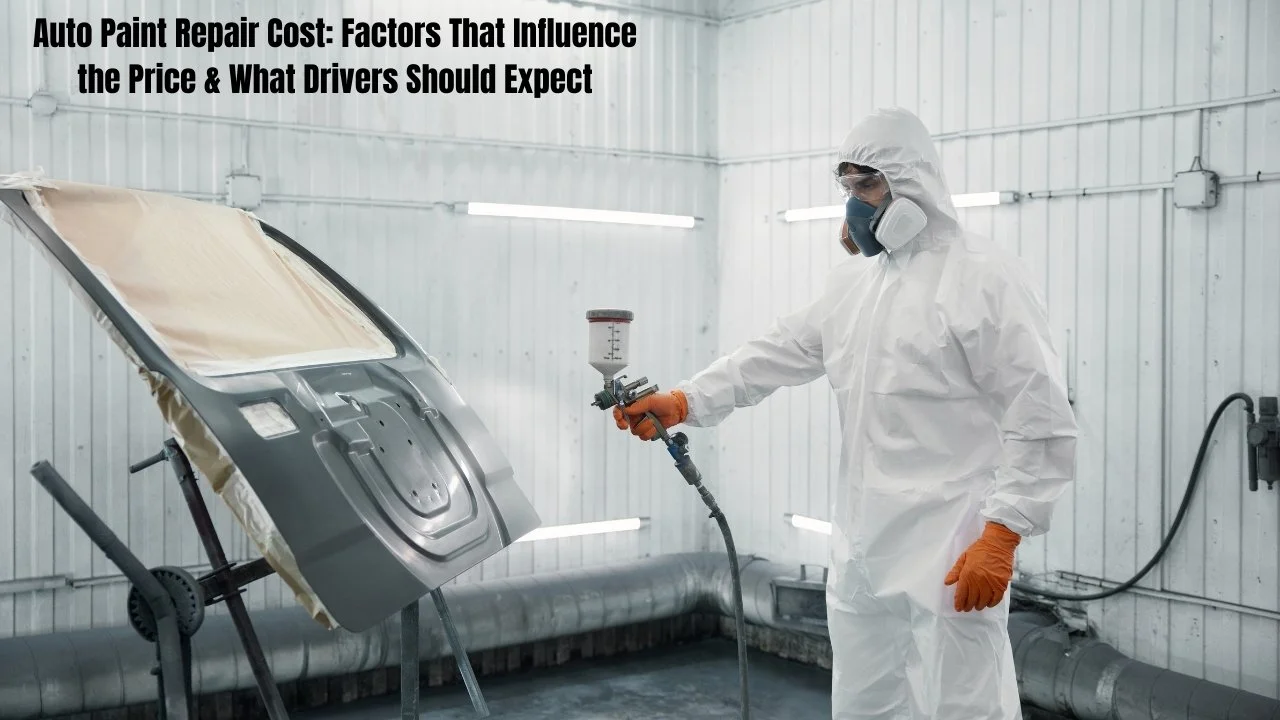
Applying paint requires precision and patience. Skilled technicians use spray guns to apply thin, even coats. Multiple coats build up the proper thickness gradually.
Paint mixing happens before application. Technicians use your car brand paint codes to create exact color matches. They test the mixed paint on sample panels under different lighting to ensure perfect color accuracy.
Base coat application takes several hours. Most repairs need 2-4 base coats for proper coverage and color depth. Metallic paint or pearl finish colors require extra coats.
Clear coat application follows base coat drying. This transparent protective layer shields colored paint from UV damage and scratches. Professional shops apply 2-3 clear coat layers for maximum protection.
Final touch-ups include wet sanding and polishing. This finishing work adds 5-10% to total labor cost but dramatically improves appearance and brings out deep gloss.
Material Costs That Impact Auto Paint Repair Expenses
Material cost typically represents 20-40% of total auto paint repair cost. The quality and type of materials used significantly affect both initial price and long-term value.
Paint Type and Quality Differences
Lacquer paint is the most affordable option but rarely used on modern cars. It dries quickly and provides good shine but chips easily and fades faster than other types.
Enamel paint offers better repair durability than lacquer. Acrylic enamel and synthetic enamel are popular mid-range choices. Material cost for enamel paint runs $200-$500 for typical repairs.
Urethane paint represents the premium choice for car paint repair. It costs more upfront but lasts 2-3 times longer than lacquer paint. Urethane paint resists chemicals, UV rays, and scratches better than other options.
Factory paint standards on newer cars use advanced urethane paint formulas. Matching OEM paint requirements ensures your repair looks factory-fresh. Some luxury cars require specific paint formulations that increase material cost by 30-50%.
Specialty Paint Finishes and Premium Options
Metallic paint contains tiny metal flakes that create sparkle and depth. This popular finish costs 20-30% more than solid colors. Color matching with metallic paint is more challenging because flake orientation affects appearance.
Pearl finish paint uses ceramic crystals instead of metal flakes. This creates a unique color-shifting effect. Material cost for pearl finish runs 25-35% higher than standard paint.
Matte paint has gained popularity on modern cars. This non-glossy finish requires special paint formulations and techniques. Matte paint costs 40-50% more than regular glossy finishes.
Premium paint finishes like tri-coat colors involve multiple layers of different paints. These complex systems create rich, deep colors but increase both material cost and labor cost by 60-80%.
Additional Materials Required
Clear coat is essential for modern car paint repair. This transparent protective layer shields colored paint from damage. Material cost for quality clear coat ranges from $50 to $150 depending on repair size.
Primer serves as the foundation for paint adhesion. Professional body shops stock multiple primer varieties for different metals and plastics. Primer material cost adds $30-$100 to most repairs.
Sanding materials, masking / taping supplies, polishing compounds, and cleaning products add another $50-$130 to typical repairs. These consumables seem minor but are essential for quality results.
Vehicle Make and Model: How Your Car Affects Repair Costs
Your vehicle make and model significantly impacts auto paint repair cost. Different cars have different requirements that affect both materials and labor.
Luxury Vehicles and Premium Auto Paint Repair Costs
Luxury cars from brands like BMW, Mercedes-Benz, Lexus, and Audi cost 20-50% more to repair than mainstream vehicles. These premium vehicles have strict OEM paint requirements and use specialized paint formulations.
Factory paint standards for luxury vehicles demand exact color matching. Small color variations that might pass on regular cars are unacceptable on luxury cars. This perfectionist approach increases labor hours and requires more precise paint mixing.
Some luxury brands use unique premium paint finishes not found on regular cars. These proprietary paints cost more per gallon. Material cost for luxury car paint can run $300-$800 just for materials, compared to $150-$300 for mainstream vehicles.
Vehicle Size and Surface Area Considerations
Compact cars serve as the baseline for paint repair pricing. Their smaller size requires less paint and takes less time to repair. A typical panel repair on a compact car costs $400-$800.
SUVs and trucks cost 30-50% more than compact cars for similar damage. Larger vehicles have bigger panels requiring more paint. A door repair that costs $500 on a sedan might run $700-$750 on an SUV.
A full car paint job on a large SUV runs $5,000-$8,000, while a compact car costs $3,000-$4,500. The size difference directly impacts both material cost and labor hours.
Complex Body Designs and Hard-to-Reach Areas
Modern car designs feature flowing lines and complex curves. These attractive shapes create challenges for car paint repair. Repair complexity increases with sharp body creases, deep curves, and contoured surfaces.
Hard-to-reach areas require extra labor hours. Spaces behind bumpers, under trim pieces, and around door handles need special attention. Skilled technicians must remove components to access these areas properly.
Some vehicles have unique body panels made from aluminum or composite materials. These materials need different preparation techniques and primers than standard steel panels, increasing the repair cost range.
Professional Auto Paint Repair Cost vs DIY Options
Choosing between professional paint repair and DIY paint repair affects both immediate costs and long-term results.
Professional Shop Pricing Breakdown
Professional body shops offer comprehensive car paint repair services with guaranteed results. Full-service shops charge $945-$5,000+ depending on damage severity and vehicle size.
National chain shops typically charge $1,200-$3,000 for moderate repairs. These businesses offer consistent quality and standardized pricing. They often run promotions that help with repair affordability.
Independent auto body shop rates vary more widely. Established local shops with excellent reputations charge $1,500-$4,000. Smaller independent shops might charge $800-$2,500.
Mobile paint repair services offer convenience at $200-$800 for minor paint damage. These technicians come to your location for small repairs like paint chips and surface scratches.
Lifetime warranty coverage varies by shop. Many reputable shops guarantee their work for as long as you own the car. Cheaper shops might offer only 1-2 year warranties or no guarantee at all.
DIY Auto Paint Repair Cost and Considerations
DIY paint repair significantly reduces out-of-pocket expenses for minor paint damage. Simple touch-up paint kits cost $15-$50 at auto parts stores. These work well for paint chips and small surface scratches.
Complete DIY repair kits for larger damage run $150-$300. These kits include sandpaper, primer, paint, clear coat, and basic tools.
The skill level required varies by damage type. Simple touch-ups need minimal experience. Larger repairs require more skill with sanding, masking / taping, and spray technique.
Color accuracy presents the biggest challenge for DIY repairs. Matching your car’s exact color without professional paint mixing equipment is difficult. Even using car brand paint codes, DIY results often show slight color variation.
Cost-Benefit Comparison
| Aspect | Professional | DIY |
|---|---|---|
| Cost | $945-$5,000+ | $150-$300 |
| Time | 8-40 hours | 10-20 hours |
| Warranty | Lifetime warranty | None |
| Color Match | Exact | Approximate |
| Durability | 5-10+ years | 1-3 years |
| Best For | Visible damage, luxury cars | Minor paint damage, practice |
DIY paint repair makes sense for minor paint damage on older cars where perfect color matching isn’t critical. Professional paint repair makes sense for severe paint damage, visible panels, and when you want guaranteed results.
Geographic Location and Its Effect on Auto Paint Repair Cost
Where you live significantly impacts auto paint repair cost. Regional pricing differences across the USA create substantial variation in repair estimates for identical work.
Regional Price Variations Across the USA
Local labor rates in major cities typically run 30-50% higher than rural areas. Cities like San Francisco, New York, and Boston have the highest hourly shop rates at $100-$150 per hour. Rural Midwest and Southern locations charge $50-$80 per hour.
California leads the nation in high paint repair pricing. High wages, expensive real estate, and strict environmental regulations drive up costs. A full car paint job in California costs $4,000-$7,000 compared to $3,000-$5,000 in the Midwest.
New York and Massachusetts also feature premium pricing. Auto body shop costs in these states run 40-60% above the national average.
Florida and Texas offer moderate repair affordability. These large states have competitive markets that keep prices reasonable.
The Midwest and South generally offer the best budget-friendly repairs. States like Oklahoma, Kansas, Arkansas, and Mississippi have local labor rates 20-40% below coastal states.
Shop Type and Overhead Expenses
Repair shop location within your city affects pricing. Shops in premium commercial districts pay higher rent and charge accordingly. Facilities in industrial areas or suburbs typically offer better repair affordability.
Independent shops often provide the best value. Owner-operated auto body shop businesses have lower overhead than large chains. Expect to save 10-20% at good independent shops.
Dealership service centers charge 40-80% more than independent shops for the same car paint repair. Choose dealerships only when OEM paint requirements matter or warranty concerns exist.
Mobile repair services eliminate shop overhead entirely. Without building costs, they charge 20-30% less than traditional shops for minor paint damage and paintless dent removal (PDR).
Insurance Coverage for Auto Paint Repair Costs
Auto insurance can significantly reduce out-of-pocket expenses for vehicle paint damage. Understanding your coverage helps you make smart decisions about claim filing versus paying directly.
When Insurance Covers Paint Damage
Collision coverage pays for paint patch repair and respray services after accidents. If you hit another vehicle, object, or get hit by another driver, collision coverage handles your repair costs.
Comprehensive coverage covers vehicle paint damage from non-collision incidents. Tree branches, hail, vandalism, and falling objects fall under comprehensive. If shopping carts scratch your car or someone keys your paint, comprehensive coverage applies.
Insurance claim cost depends on your insurance deductible. You must pay this amount before insurance covers the rest. Common deductibles range from $250 to $1,000. If repairs cost less than your deductible, insurance won’t help.
Making Smart Insurance Decisions
Compare repair cost range to your insurance deductible before filing claims. If repair estimates show $600 in damage and you have a $500 deductible, insurance saves only $100.
Premium increase after claims can cost more than the repair itself. Insurance companies often raise rates 20-40% after claims. This increase lasts 3-5 years. A $1,000 claim might cost you $1,500-$2,000 in higher premiums over time.
Calculate the break-even point for claim filing. Take your deductible amount and add potential premium increases over 3 years. If repair costs exceed this total, filing makes financial sense. Otherwise, paying out-of-pocket expenses saves money long-term.
Damage severity should guide insurance decisions. Always file claims for severe paint damage costing $3,000+. For minor paint damage under $1,000, consider paying directly.
Working with Insurance for Paint Repairs
Get proper repair estimates before starting work. Most insurance companies require written estimates from approved shops. Some insurers send adjusters to inspect damage before authorizing repairs.
Choose an auto body shop from your insurer’s preferred network when possible. Network shops have pre-negotiated rates and streamlined claim filing processes.
Document everything related to your claim. Take photos of damage from multiple angles. Keep copies of all repair estimates, invoices, and correspondence.
Money-Saving Strategies for Auto Paint Repair
Smart approaches to car paint repair help you get quality work without overspending. These strategies balance repair affordability with maintaining proper repair durability.
Getting the Best Auto Paint Repair Cost
Multiple repair quotes are essential for finding fair pricing. Contact at least 3-5 shops for written repair estimates. This reveals typical local labor rates and helps identify overpriced shops.
Request detailed cost breakdown information from each shop. Ask them to separate labor cost and material cost. Understanding the components helps you compare estimates fairly.
Negotiating repair costs works better than many people expect. Shops often have flexibility, especially during slow periods. Politely ask if they can reduce prices or offer payment plans.
Timing repairs strategically saves money. Auto body shop businesses slow down during winter months in many regions. Shops offer discounts during these periods to maintain steady work flow.
Look for package deals when you have multiple issues. Repairing several paint chips or scratches together costs less per repair than fixing them individually.
Preventive Maintenance to Avoid Repair Costs
Regular car washing prevents dirt and contaminants from damaging paint layers. Wash your vehicle every 2 weeks, more often in winter or near saltwater. This simple paint maintenance costs $10-$20 per wash.
Waxing provides protective layers that shield paint from UV damage and minor paint damage. Apply quality wax every 3-4 months. Good car wax costs $15-$30 and lasts multiple applications. This preventive care dramatically extends paint longevity.
Park in covered areas whenever possible. Garage parking protects paint from sun, hail, bird droppings, and tree sap. This simple habit prevents thousands in future auto paint repair cost.
Apply paint protection film to vulnerable areas. Clear film on front bumpers, door edges, and behind door handles prevents paint chips and surface scratches. Installation costs $500-$2,000 but saves money over time.
Address minor paint damage immediately. Small paint chips and surface scratches cost $15-$50 to fix with touch-up paint. Ignoring them leads to rust and severe paint damage costing hundreds or thousands later.
Alternative Repair Methods
Paintless dent removal (PDR) works excellently for dents without paint layers damage. Technicians massage metal back into shape from behind panels. This process costs $100-$500 versus $500-$1,500 for conventional repairs.
PDR maintains original factory paint, which matters for newer luxury cars and vehicles with metallic paint or pearl finish colors. This technique works best on shallow dents where paint hasn’t cracked.
Partial paint patch repair costs less than repainting entire panels. When damage stays small, skilled technicians can blend repairs into surrounding paint. This approach saves 40-60% compared to full panel repainting.
Consider spot repairs for multiple small areas. Modern blending techniques allow repairs of several minor paint damage spots without repainting large sections. This keeps costs down while maintaining appearance.
FAQs
How much does it cost to fix a small paint scratch on a car?
Small surface scratches that only affect the clear coat cost $50-$300 to repair professionally. DIY repair kits with touch-up paint cost $15-$50 and work well for tiny scratches. Deep scratches that expose primer cost $300-$800 because they need more labor hours and surface preparation. The final price depends on scratch location, your vehicle make and model, and whether you choose professional paint repair or handle it yourself.
Is auto paint repair covered by car insurance?
Auto insurance covers paint repairs if damage results from covered incidents. Collision coverage pays for accident damage, while comprehensive coverage handles hail, vandalism, and falling objects. You must pay your insurance deductible first, typically $250-$1,000. If repair cost range is less than your deductible, insurance won’t help. Consider that claim filing might raise your premiums 20-40% for 3-5 years, so calculate whether using insurance saves money versus paying out-of-pocket expenses.
How long does professional auto paint repair take?
Repair complexity determines timeline. Simple surface scratches take 1 day. Deep scratches need 2-3 days for proper sanding, priming, painting, and clear coat application. Severe paint damage with dents or rust requires 3-7 days. A full car paint job takes 5-10 days. Each paint layers must cure completely before adding the next coat. Rushing the process compromises repair durability. Professional body shops provide accurate timelines based on your specific damage.
Can I repair car paint damage myself to save money?
DIY paint repair works for minor paint damage like small paint chips and surface scratches. DIY repair kits cost $150-$300 versus $945-$5,000 for professional paint repair. However, DIY requires proper skill level and specialized tools. Color accuracy is challenging without professional paint mixing equipment. DIY repairs lack warranties and often show color variations. For severe paint damage, visible panels, or luxury cars, professional work provides better long-term value despite higher upfront costs.
Why is auto paint repair so expensive compared to other car repairs?
Labor cost accounts for 40-60% of auto paint repair cost because the work requires skilled technicians with years of training. Surface preparation, sanding, masking / taping, paint mixing, and color matching demand precision. Multiple paint layers and clear coat applications need proper drying time between coats. Material cost includes expensive urethane paint, primers, and clear coat. Shop overhead for spray booths, ventilation systems, and environmental compliance adds expenses. The combination of labor hours, quality materials, and specialized equipment drives high prices.
What’s the difference between spot repair and full panel painting?
Paint patch repair (spot repair) fixes small damaged areas without repainting the entire panel. This costs $100-$600 and works for minor paint damage smaller than a dinner plate. Full panel painting covers the complete door, hood, or fender and costs $400-$1,200 per panel. Spot repairs save money but might show slight color variations on older vehicles with faded paint. Full panel painting ensures perfect color matching across the entire surface. Skilled technicians recommend full panel work when spot repairs would be visible or damage covers large areas.
How much does it cost to repaint an entire car?
A full car paint job typically costs $3,000-$5,000 for quality work on standard vehicles. Luxury cars run $5,000-$8,000 due to OEM paint requirements and premium paint finishes. Budget repaints start at $1,500-$2,500 but use lower-quality materials with shorter paint longevity. Show-quality repaints with custom colors cost $10,000+. The cost breakdown includes labor cost for extensive surface preparation, multiple paint layers, clear coat application, and final touch-ups. Vehicle make and model size significantly affects pricing, with SUVs and trucks costing 30-50% more than compact cars.
Do luxury cars cost more for paint repair?
Yes, luxury cars cost 20-50% more for car paint repair than mainstream vehicles. Luxury cars require exact color matching to meet factory paint standards. Many use proprietary premium paint finishes with metallic paint or pearl finish that increase material cost by $150-$500. OEM paint requirements demand specialized paints and techniques. Skilled technicians need brand-specific training for luxury vehicles. Complex body designs on high-end cars increase repair complexity and labor hours. Insurance companies recognize these higher costs, but you’ll still pay more in out-of-pocket expenses or insurance deductible amounts.
Conclusion:
Auto paint repair cost varies significantly based on damage severity, labor cost, material cost, and your vehicle make and model. Understanding these factors helps you make smart decisions about repairing your car’s paint.
Surface scratches and minor paint damage cost $50-$300 to fix. Deep scratches exposing primer run $300-$800. Severe paint damage with dents and rust reaches $800-$3,000 or more. A full car paint job costs $3,000-$5,000 for quality work.
Professional paint repair provides guaranteed color accuracy, repair durability, and typically includes a lifetime warranty. DIY paint repair saves money at $150-$300 but requires skill level and produces variable results.