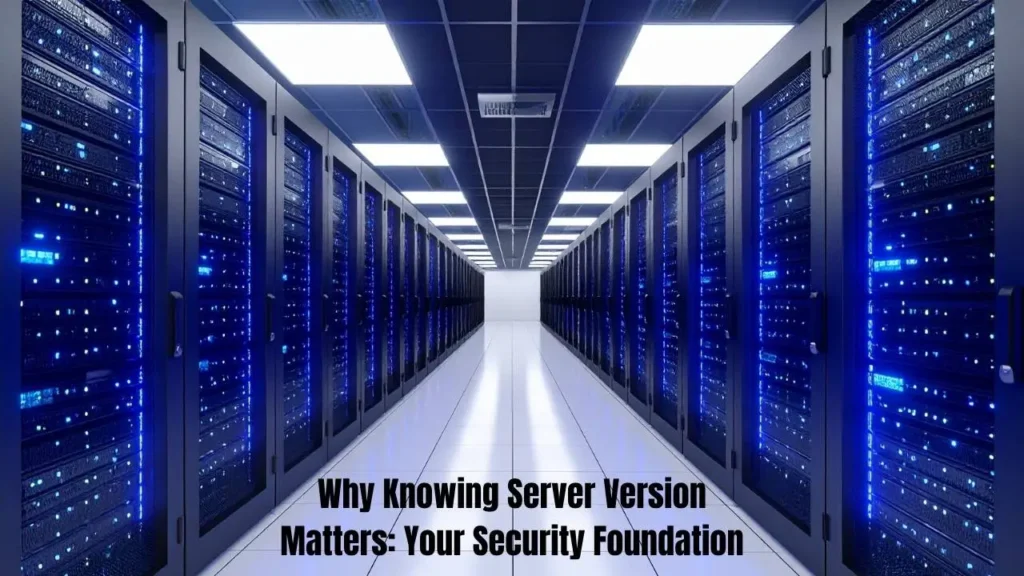
Why Knowing Server Version Matters: Your Security Foundation
Do you know what server version is running on your infrastructure right now? If you hesitated, you’re not alone. But that gap in knowledge could be your biggest security risk.
Whether you manage five servers or five hundred, knowing your server OS version isn’t optional. It’s the foundation of security, compliance, and stability. One outdated operating system version can expose your entire network to attackers. If you face any problem related iphone guide then visit this page.
What Is Server Version and Why It Matters
When we talk about server version, we mean specific details about your server’s operating system. This includes the OS build number, edition number, and patch level.
For Windows Server, you might see Windows Server 2019 or Windows Server 2022. For Linux servers, it could be Ubuntu 22.04 or CentOS 8. Each version has different security patches and capabilities.If you have any issue related to What Model Is My Phone then dont worry we also provide solution of this issue here on this website.
The build number matters too. Two servers running “Windows Server 2019” might have different security postures if one has the latest patches and the other doesn’t.
The Real Risks of Version Ignorance
Not knowing your server OS version creates serious problems:
Security vulnerabilities are the biggest threat. New flaws appear daily in operating systems. These get tracked in CVE databases. Without knowing your exact operating system version, you can’t check if you’re vulnerable.
Compliance failures cost money and reputation. Regulations like HIPAA, GDPR, and ISO require documenting your infrastructure. Auditors will ask for server version information. No data means failed audits.
Unsupported systems leave you defenseless. Every OS reaches end of life eventually. Running a legacy OS means no security patches when vulnerabilities appear.
How to Check Your Server Version Fast
Let’s get practical. Here’s how to find your server version quickly.
Windows Server Methods
Using Command Line:
Open CMD and run:
systeminfo | findstr /B /C:"OS Name" /C:"OS Version"
Or use PowerShell for cleaner output:
Get-CimInstance Win32_OperatingSystem | Select-Object Caption, Version, BuildNumber
The Get-CimInstance command queries WMI for system details. It shows your exact OS build and edition number.
Using GUI:
Right-click the Start menu → System. Scroll to Windows Specifications to see your version and build number.
Linux Server Methods
For Linux servers, several commands work across distributions:
cat /etc/os-release
This shows your distribution version and codename. Works on Ubuntu, Debian, Red Hat, and most modern systems.
For kernel version:
uname -a
On systemd-based distributions, use:
hostnamectl
Checking Remote Servers
Most admins need to check remote servers. Here’s how:
Windows Remote Check:
Invoke-Command -ComputerName Server01 -ScriptBlock {
  Get-CimInstance Win32_OperatingSystem
}
Linux Remote Check:
ssh user@server01 "cat /etc/os-release"
The SSH method works instantly for quick checks. PowerShell Remoting handles multiple Windows systems efficiently.
Building a Version Management Strategy
Checking versions once isn’t enough. You need ongoing management.
Automate Everything
Manual checks don’t scale. Use automation scripts or tools like Ansible to scan regularly. Schedule weekly checks minimum.
Vulnerability scanning tools like Nessus automatically detect server OS versions during security scans. They compare against known vulnerabilities immediately.
Document Your Inventory
Create a complete server version inventory. Include:
- Server hostname
- Operating system version
- OS build number
- Last patch date
- Support status
Store this in asset management tools or a CMDB. Keep it current through automation.
Track EOL Dates
Every server version has an expiration date. Windows Server 2012 reached end of support in 2023. Systems still running it are unsupported systems—no patches, no security.
Create calendars tracking when your server versions reach end of life. Start upgrade planning 12-18 months early. If you want to read about Make House Music than visit this page

Critical Best Practices
Never ignore minor versions. The difference between build 17763.1234 and 17763.2565 includes critical security patches.
Audit regularly. Monthly reviews catch problems before they become emergencies.
Integrate with change management. Every patch or upgrade should update your version documentation.
Alert on changes. If a server OS version changes unexpectedly, investigate immediately.
Tools That Help
You don’t need to build everything manually:
- Ansible for automated discovery
- Nessus or Qualys for security-focused version tracking
- Itarian Endpoint Manager for comprehensive management
- Nagios or Zabbix for continuous monitoring
Choose tools that integrate with your existing configuration management tools and CMDB.
The Bottom Line
Knowing your server version isn’t just technical housekeeping. It’s fundamental security. Outdated systems attract attackers. Unsupported systems have no defense against new threats.
The Equifax breach exposed 147 million records because they couldn’t quickly identify vulnerable server versions. WannaCry crippled hospitals running old Windows Server editions.
Don’t let version ignorance be your downfall. Build checking into your workflows. Automate discovery. Document everything. Your server OS version data should be as current as your backup logs.
Take action now: Audit your environment this week. Document every server version. Flag unsupported systems. Build automation for ongoing tracking.
Your infrastructure’s security starts with knowing what you’re running. Make server version management a priority today.