
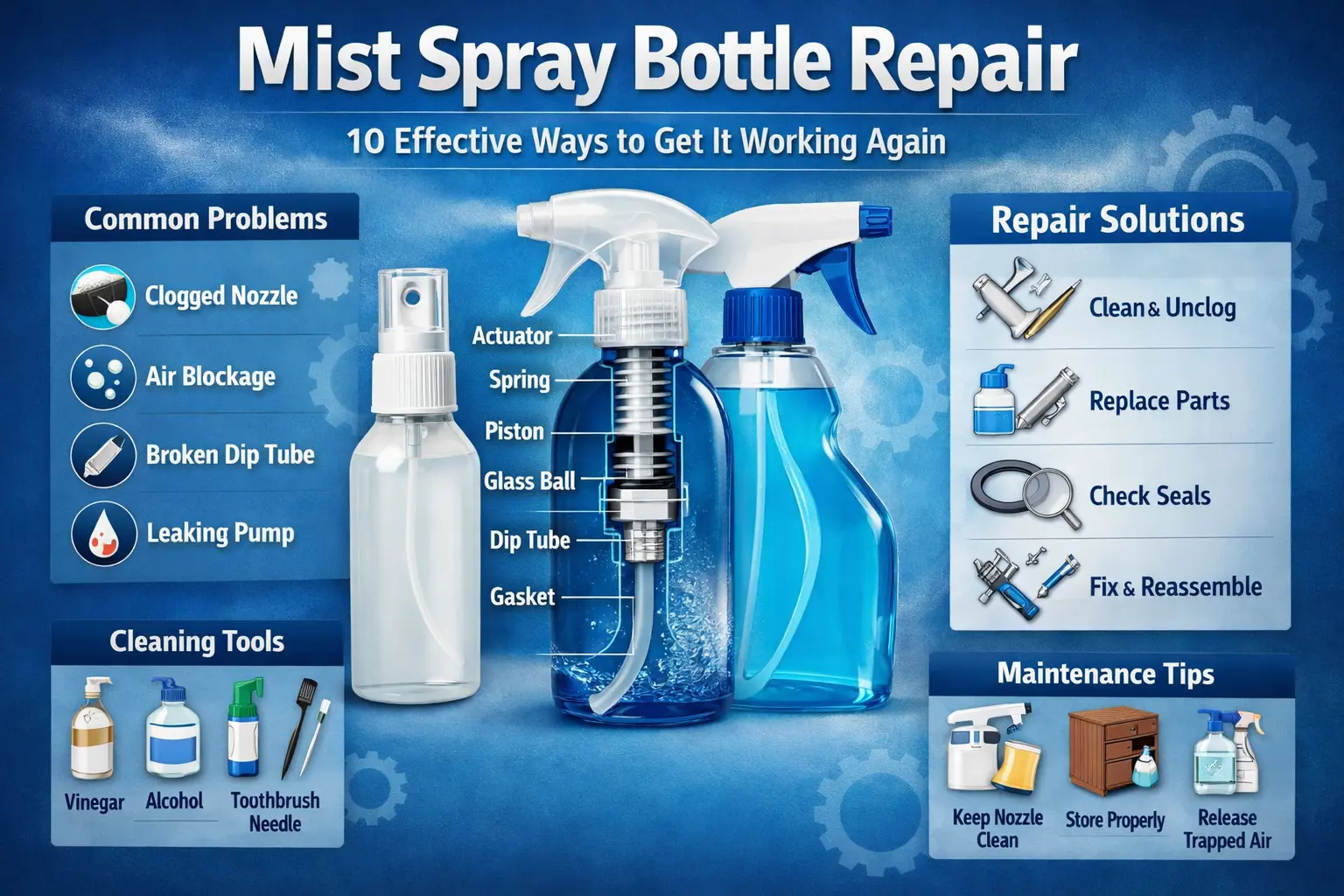
Mist Spray Bottle Repair: 10 Effective Ways to Get It Working Again
There’s nothing more frustrating than reaching for your favorite facial mist or cleaning spray only to find it won’t work. Before you toss that bottle in the trash, you should know that most spray bottle problems can be fixed in just a few minutes with the right approach. What you need is to accurately identify the problem so you can quickly find the right solution.If you face any problem related iphone guide then visit this page.
Understanding how your spray bottle works and what’s causing the issue will help you repair it faster and save money on replacements. In this guide, we’ll walk you through the 10 most common spray bottle problems and their solutions.
1. Understanding Your Spray Bottle Components
Before attempting any mist spray bottle repair, it’s essential to understand the internal components. Knowing how each part functions will help you diagnose issues faster and avoid unnecessary damage during repairs. If you have any issue related to Happy New Year then dont worry we also provide solution of this issue here on this website.
1.1 Two Main Types of Spray Bottles
Fine Mist Sprayers feature a small nozzle aperture that produces a delicate mist, making them perfect for skincare products, facial sprays, and body mists. These bottles typically have smaller capacities for portability.
Trigger Spray Bottles have larger nozzle apertures and tube diameters, allowing for long-range spraying. They’re ideal for household cleaning products, gardening applications, and large-area coverage. The ergonomic trigger design minimizes hand fatigue during extended use. If you want to read about Broken Finger or Thumb than visit this page.
1.2 Key Internal Components
Both types share similar internal structures with these essential parts:
- Nozzle: Atomizes the liquid to create the spray
- Actuator (Spray Head): Activates the spray mechanism when pressed
- Piston: Creates pressure to push liquid upward
- Spring: Returns the pump head to its original position
- Dip Tube: Transports liquid from the bottle bottom to the pump
- Gasket/Seal: Prevents leakage between components
- Housing: Protects and encloses all internal parts
2. How Spray Bottles Work
The working principle of a spray bottle is straightforward. When you press the spray head or pull the trigger, the internal piston moves and creates a vacuum inside the bottle. This vacuum draws liquid up through the dip tube into the pump chamber, where it’s then atomized and sprayed out through the nozzle.
Understanding this simple mechanism helps you identify where things might be going wrong.

3. The 10 Most Common Spray Bottle Problems and Their Repairs
3.1 Problem #1: Air Blockage in Actuator
If your spray bottle is overfilled or has uneven internal pressure, it may cause poor spray performance or prevent spraying altogether. This issue occurs frequently with skincare mist spray bottles, especially aluminum spray cans.
Solution: Try rotating the actuator 180° clockwise or counterclockwise and then test if it sprays properly. Alternatively, you can remove the existing actuator and replace it with a smaller one for better performance.
3.2 Problem #2: Air Blockage in Dip Tube
This issue often happens with bottles that have been left unused for extended periods. Chemical components can settle, and internal pressure becomes uneven, leading to blockages in the dip tube.
Solution: Without disassembling anything, simply invert the bottle and press the actuator for a while to release excess gas. Then turn it back over, and it should spray normally.
If your bottle is detachable, remove the pump head and press the actuator to expel all liquid with bubbles from the tube. Reattach the pump head and test again.
3.3 Problem #3: Nozzle or Actuator Too Tight
When the spray head cannot be pressed down or the trigger won’t pull, the nozzle might be locked or overly tightened. Many spray pumps are intentionally tightened during shipping to prevent leakage.
Solution: Try rotating the spray actuator or nozzle to activate the pump’s startup mechanism. This simple action usually resolves the issue and restores normal spraying immediately.
3.4 Problem #4: Clogged Nozzle (Most Common Issue)
This is the most frequent problem for both types of spray bottles. When a bottle isn’t used for a long time, residual liquid in the nozzle can oxidize or form dry residues, leading to complete blockage.
Solutions for Clogged Nozzles: Here are several effective methods to clear a clogged nozzle:
Method 1 – Basic Water Soak: Remove the pump head from the bottle and detach the dip tube. Submerge the entire pump head in water, then try pressing or pulling the trigger several times.
Method 2 – Warm Water Treatment: If the basic soak doesn’t work, soak the pump head in warm water (no more than 70°C or 158°F) for 10-15 minutes. Afterward, gently clean the nozzle using a toothbrush, needle, or toothpick. Reattach the dip tube and test the spray while it’s still in warm water. This process usually clears out any small debris in the nozzle.
Method 3 – Vinegar Soak: If your spray bottle contains acidic or alkaline substances, soak the nozzle in white vinegar for more than 30 minutes. This works particularly well for hard water deposits and mineral buildup.
Method 4 – Alcohol Soak: For clogs caused by oil-based substances, sticky materials, or dried chemicals, soaking the nozzle in isopropyl alcohol can be highly effective.
Method 5 – Pressure Method: Here’s a more forceful but straightforward approach. Without disassembling any components, firmly press the bottle body. This pressure can push out any debris or trapped air through the pump, allowing your spray bottle to start working again.
3.5 Problem #5: Spring Chamber Clogs
If your spray bottle can be pressed and water draws up but gets stuck in the spring chamber and cannot be sprayed out, it’s likely due to a blocked chamber or a damaged spring that cannot return to its normal position.
Solution: You need to disassemble the pump head, remove the spring, and clean the spring chamber thoroughly. Check the spring’s return function by pressing it. If the spring returns to its normal position, the spray bottle should function properly after cleaning the chamber.
If the spring is damaged, it’s advisable to replace the entire pump head. Make sure to disassemble the pump on a clean, organized surface to avoid losing any small parts during reassembly.
3.6 Problem #6: Sealing Problems
If your spray bottle has been dropped or subjected to strong impact, the internal components may become misaligned or loose. This leads to improper spraying or leaking. In most cases, this is due to a displaced or damaged gasket.
Solution: Remove the pump head from the bottle and gently shake the pump housing to check for looseness. Inspect the bottom gasket for any signs of damage.
If the gasket is loose, carefully remove it without disassembling the spring and glass ball inside the pump, then firmly reinsert the gasket to ensure a proper seal. If the gasket is damaged, you’ll likely need to replace the entire pump head, as sourcing individual gasket components can be both difficult and costly.
3.7 Problem #7: Dip Tube Clogs
This issue may seem unlikely but is often overlooked during mist spray bottle repair attempts.
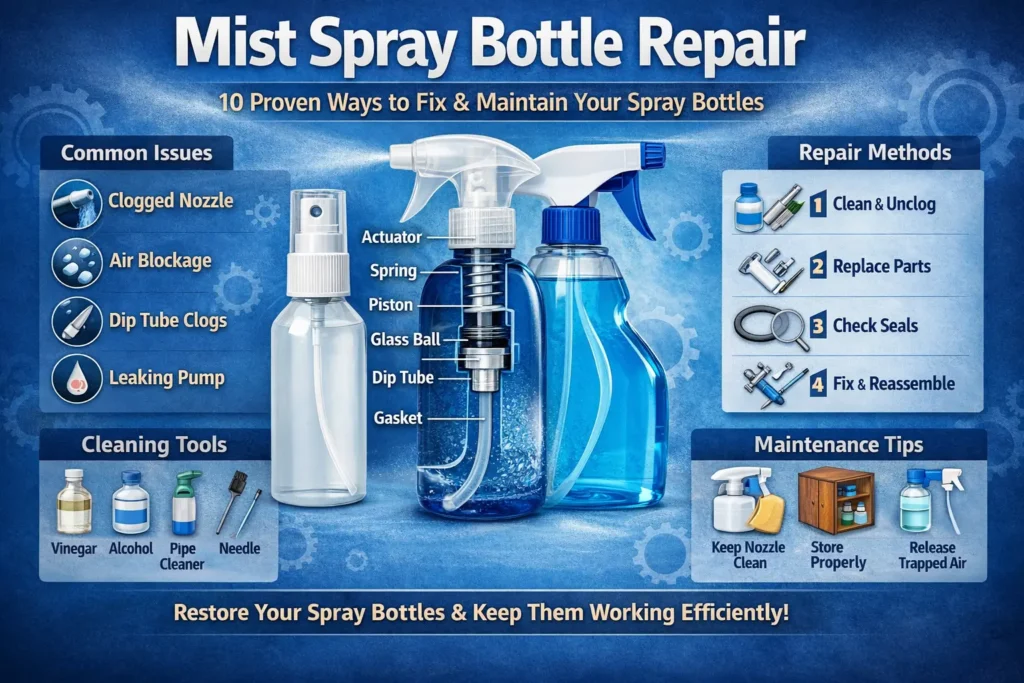
Solution: Remove the dip tube from the pump housing and clean it using a fine brush or pipe cleaner with clean water. Don’t forget to clean the connection area at the end of the pump housing where the dip tube attaches. This ensures smooth liquid flow when reassembled.
3.8 Problem #8: Dip Tube Damage
Due to prolonged use or temperature changes, the dip tube may develop minor cracks. Since dip tubes are usually transparent and made from thick material, these small damages can be hard to detect. However, cracks seriously affect the bottle’s functionality and liquid flow.
Solution: Inspect the dip tube under bright light for any cracks or holes. Gently stretch and bend the tube to check for damage. If cracks are found, the dip tube should be replaced.
If the cracks are near the bottom and the tube is long enough that cutting won’t affect liquid pickup, you can simply cut off the damaged section and continue using the bottle.
3.9 Problem #9: Insufficient Liquid Level
Sometimes, if there’s too little liquid in the bottle, it can lead to inadequate internal pressure or cause the dip tube to fail to fully immerse in the liquid. This results in the spray bottle not functioning properly.
Solution: Refill the spray bottle with the original product to ensure proper operation. Most spray bottles work best when filled to at least one-third capacity.
3.10 Problem #10: Incompatibility Between Liquid and Spray Pump
While the main material used for making pump heads is PP (polypropylene), the internal components are made from various materials such as stainless steel springs, glass balls, and PE (polyethylene) gaskets.
When the product is incompatible with the internal components of the pump head, it can lead to corrosion, swelling, or shrinking of the parts. Sometimes, the signs of incompatibility aren’t immediately visible, but they cause your spray bottle to gradually become harder to use over time.
Solution: Even if you disassemble the pump head for deep cleaning and reassemble it, the incompatibility issue cannot be resolved. At this point, your only option is to request a return from the seller. If the spray malfunction occurs within two weeks of purchase without any apparent cause, it’s most likely due to incompatibility between the product and the pump head.
4. Usage and Maintenance Tips for Long-Lasting Spray Bottles
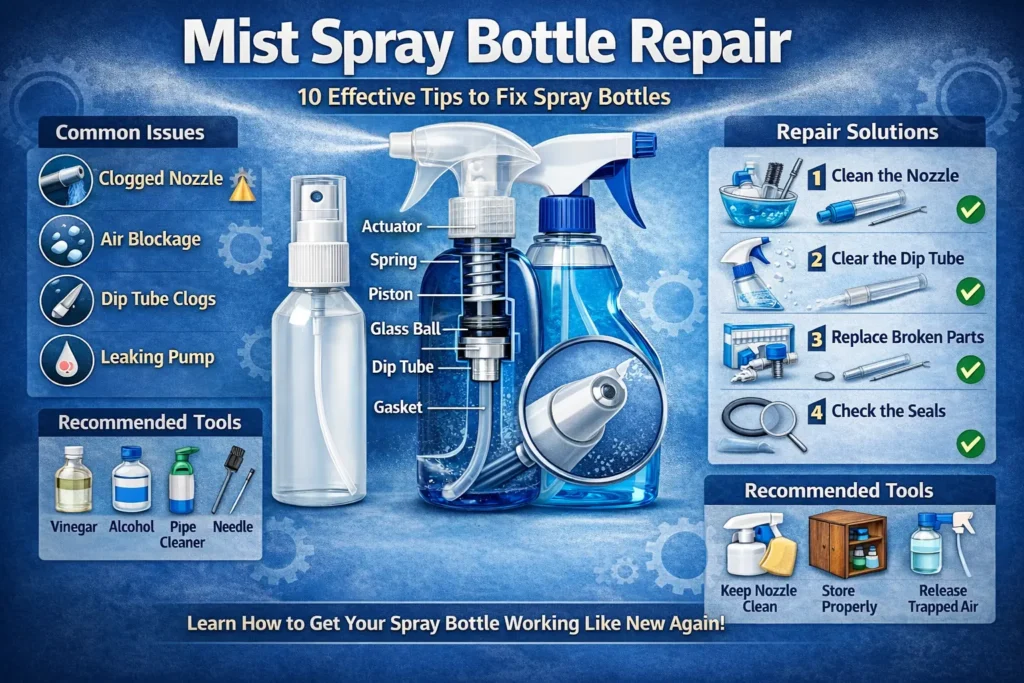
4.1 Keep the Nozzle Clean
Regular cleaning of the nozzle is essential for maintaining spray bottle performance. For cosmetic mist spray bottles with complex ingredients that tend to oxidize and form clumps, periodically wipe the nozzle with a damp soft cloth to prevent residue from clogging the spray hole. For spray bottles with larger nozzles used for household cleaning, a simple cleaning once a month is advisable.
4.2 Store Properly
Keep your spray bottles in a cool, dry place, avoiding exposure to high temperatures or direct sunlight to prevent accelerated aging of the bottle and nozzle. Spray bottles used in the bathroom and kitchen should ideally be stored in a cabinet to avoid moisture and grease from accumulating on the nozzle, which could affect future use.
This is especially important in different climate zones across the USA. In humid regions like the Southeast, extra attention to moisture prevention is necessary. In hot, sunny areas like the Southwest, protection from direct sunlight becomes crucial.
4.3 Regularly Release Trapped Air
For thicker spray products, if the bottle hasn’t been used for a long time, air may accumulate inside the pump. Try spraying while holding the bottle upside down to expel excess air, ensuring smooth spraying afterward. This simple maintenance step takes just seconds but can prevent frustrating spray failures.
5. Quick Troubleshooting Guide
Before diving into detailed repairs, try these quick diagnostic steps:
If the bottle won’t spray at all: Check if the nozzle is locked, verify liquid level, and try the rotation technique.
If spray is weak or intermittent: Look for clogs in the nozzle or dip tube, check for air blockages.
If the bottle is leaking: Inspect the gasket and check for loose components after any impacts.
If spray worked fine but gradually worsened: Consider liquid-pump incompatibility or spring chamber issues.

Conclusion
We’ve outlined the ten most common issues that can cause spray pumps to malfunction, along with their solutions. Most mist spray bottle repair tasks can be completed in just a few minutes with household items you already have. Understanding the internal components and how they work together helps you diagnose problems quickly and apply the right fix.
Remember that proper maintenance is key to preventing future issues. Regular nozzle cleaning, proper storage, and periodic air release for thicker products will keep your spray bottles functioning smoothly for months or even years.
Before replacing a malfunctioning spray bottle, try these repair methods. You’ll save money, reduce waste, and gain the satisfaction of fixing something yourself. Start with the simplest solutions first, and work your way through the more complex repairs only if needed. In most cases, a quick cleaning or adjustment is all your spray bottle needs to work like new again.